
Architectural Glass
Laminated glass
Laminated glass is two glass panes sandwiched around an interlayer and bonded under heat and pressure. ARG makes it in many combinations, choosing from six interlayers including PVB, SGP and Sentry, with Kuraray as the brand.
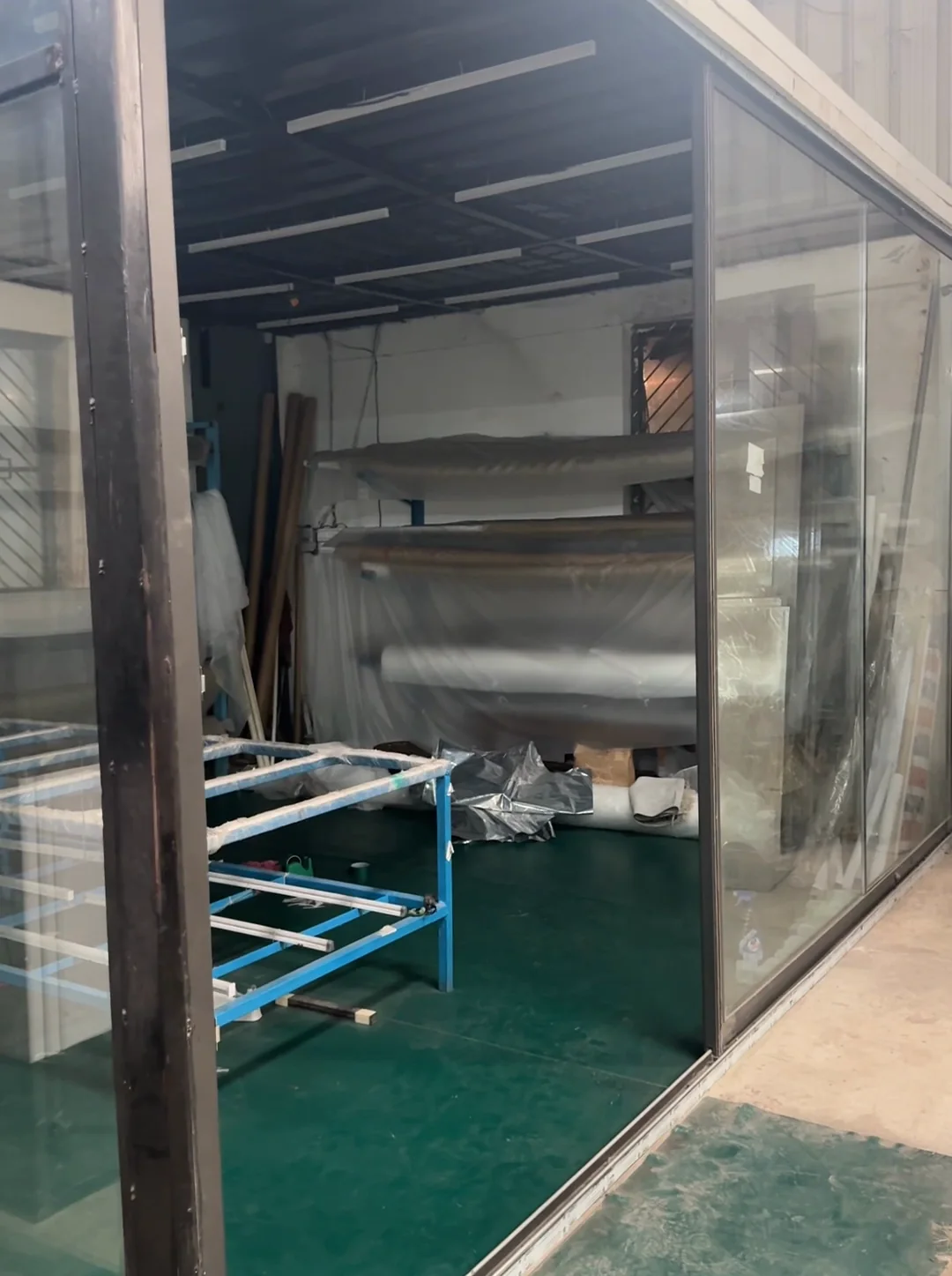 A processed pane racked at the ARG plant
 - Bonding Heat and pressure bonded
- Example build-up 10 mm clear + 2.28 mm PVB + 10 mm toughened
- Sourcing Processed in-house
Full specifications: Laminated Glass
| Bonding | Heat and pressure bonded |
|---|---|
| Example build-up | 10 mm clear + 2.28 mm PVB + 10 mm toughened |
| Sourcing | Processed in-house |
The interlayers, and what each one does when the glass breaks
| Interlayer | What it does when the glass breaks | Notes |
|---|---|---|
| PVB | Holds the glass together, the pane stays intact after breaking | Brand: Kuraray |
| Coloured PVB | – | PVB supplied in a colour |
| Milky PVB | – | PVB supplied in a milky finish |
| Extra stiff | Stated as not as good as a Sentry layer | A lower grade of the same ionoplast family as Sentry |
| SGP | – | |
| Sentry | Stays intact even if the glass shatters | Relative cost: highest |
Full technical detail, in question form
How is laminated glass made?
Two glass panes with an interlayer between them, sandwiched together through a pressing and heating process. That one sentence is the whole product.
General background, not an ARG claim: because the interlayer is bonded to both panes across their full area, the glass and the interlayer behave as one element rather than as two loose sheets. If the glass is broken, the fragments stay bonded to the interlayer instead of leaving the opening.
What does a laminated build-up look like?
One worked example: 10 mm clear glass, a 2.28 mm PVB layer, then 10 mm toughened glass.
Read that as an example, not as the product. ARG is explicit that laminated glass can be made in many, many different combinations, so the thickness of each pane, the type of each pane and the interlayer between them are all separately specifiable. The example is worth reading closely for one detail, the two leaves are not the same glass. One is clear and one is toughened.
Which interlayer can you specify?
Six interlayers are offered: PVB, coloured PVB, milky PVB, extra stiff, SGP and Sentry. Three of the six are described against each other below, by grade and by what the layer does when the glass breaks, which is the distinction a specifier chooses on.
PVB is the normal security layer. ARG describes it as providing minimum security: it does not let the glass shatter, and stays intact even after breaking.
Sentry sits at the other end. It is described as the most expensive high-performance layer, one that stays intact even if the glass shatters.
Extra stiff sits between the two. It is an ionoplast, a lower grade of the same product as Sentry, and ARG is direct that it is not as good as a Sentry layer. It is not a PVB, and treating it as one is a mix-up worth catching at drawing stage rather than at the quote.
Coloured PVB, milky PVB and SGP complete the six. This page does not describe them further. Ask and we will put the question back to the works.
You will not find a strength, acoustic or light transmission figure anywhere on this page. Those belong to the interlayer maker and are published on its own datasheets; restating them second-hand would put a number in front of you that we cannot stand behind. Tell us what the glass has to do and we will talk through which interlayer suits it.
Whose interlayer does ARG use?
Kuraray. ARG’s position is short: only the best is used, and Kuraray is the brand. Interlayers also come in different thicknesses, colours and forms, so the brand stays fixed while the grade follows the build-up you specify.
Where is laminated glass used?
General industry background, not an ARG claim: lamination is specified wherever a pane has to stay in its opening after it breaks, overhead and sloped glazing, balustrades, façades and anywhere a fallen pane would be the real hazard. In practice the decision in front of a specifier is rarely whether to laminate; it is which interlayer to laminate with.
What ARG needs from you to quote
Final sizes in millimetres, the thickness of each pane, whether either pane is to be toughened and which interlayer you want. If you have a requirement rather than a build-up in mind, send the requirement and the opening instead and we will come back with a build-up. Drawings on WhatsApp are fine.
Read next
Common questions
What is the difference between a PVB interlayer and a Sentry interlayer?
ARG describes PVB as the normal security layer, giving minimum security: it does not let the glass shatter and stays intact even after breaking. Sentry is described as the most expensive high-performance layer, which stays intact even if the glass shatters. Extra stiff sits between them as a lower grade of the same product as Sentry.
Which interlayer brand does ARG use?
Kuraray. ARG states it uses only that brand, and that interlayers come in different thicknesses, colours and forms.
Can laminated glass be made in build-ups other than the 10 mm example?
Yes. ARG states laminated glass can be made in many different combinations, the 10 mm clear, 2.28 mm PVB, 10 mm toughened build-up is one worked example, not a fixed product. Send the opening and what the glass has to do, and we will come back with a build-up.
Quote it from the drawing.
Final sizes in millimetres, or a photograph of the drawing, on WhatsApp. We come back with a build-up and a price against it.